Resource efficiency is an engineering discipline, not a marketing position. Coresphere designs for PUE, WUE and embodied carbon with the same rigour applied to rack density and power architecture.
PUE
Measured & Improved
WUE
Measured & Improved
Closed Loop
Cooling Architecture
REC
Certified Supply
Resource Efficiency Framework
Each area is measured and engineered — not described.
Measure and continuously improve PUE. Maximize useful compute from every megawatt of secured capacity.
WUE measured with the same seriousness as PUE. Operational water dependency minimized by design.
Responsible site planning, biodiversity protection, and blue-green infrastructure integrated from the masterplan.
Embodied carbon, equipment lifecycle and responsible material selection considered alongside operational efficiency.
Community impact designed around sensitive receptors — acoustic mitigation is an engineered solution, not a landscaping exercise.
Flood, extreme heat, water availability, climate change and grid resilience are engineering inputs, not risk addenda.
Cooling Architecture
Direct-to-chip liquid cooling is not an option we add to air-cooled buildings. It is designed into the facility from the first drawing.
Closed-loop cooling eliminates the inefficiency of air as a heat transfer medium. As GPU rack density rises toward 600 kW/rack, liquid cooling is the only engineering-credible approach.
Water features, retention basins, and drainage on Coresphere campuses serve engineering functions: stormwater management, flood resilience, biodiversity and microclimate improvement.
Phetchaburi is Coresphere's clean-energy campus — 80 MW solar PV and 20 MW BESS on the same site. Grid connection provides firm backup. No off-site energy procurement risk.
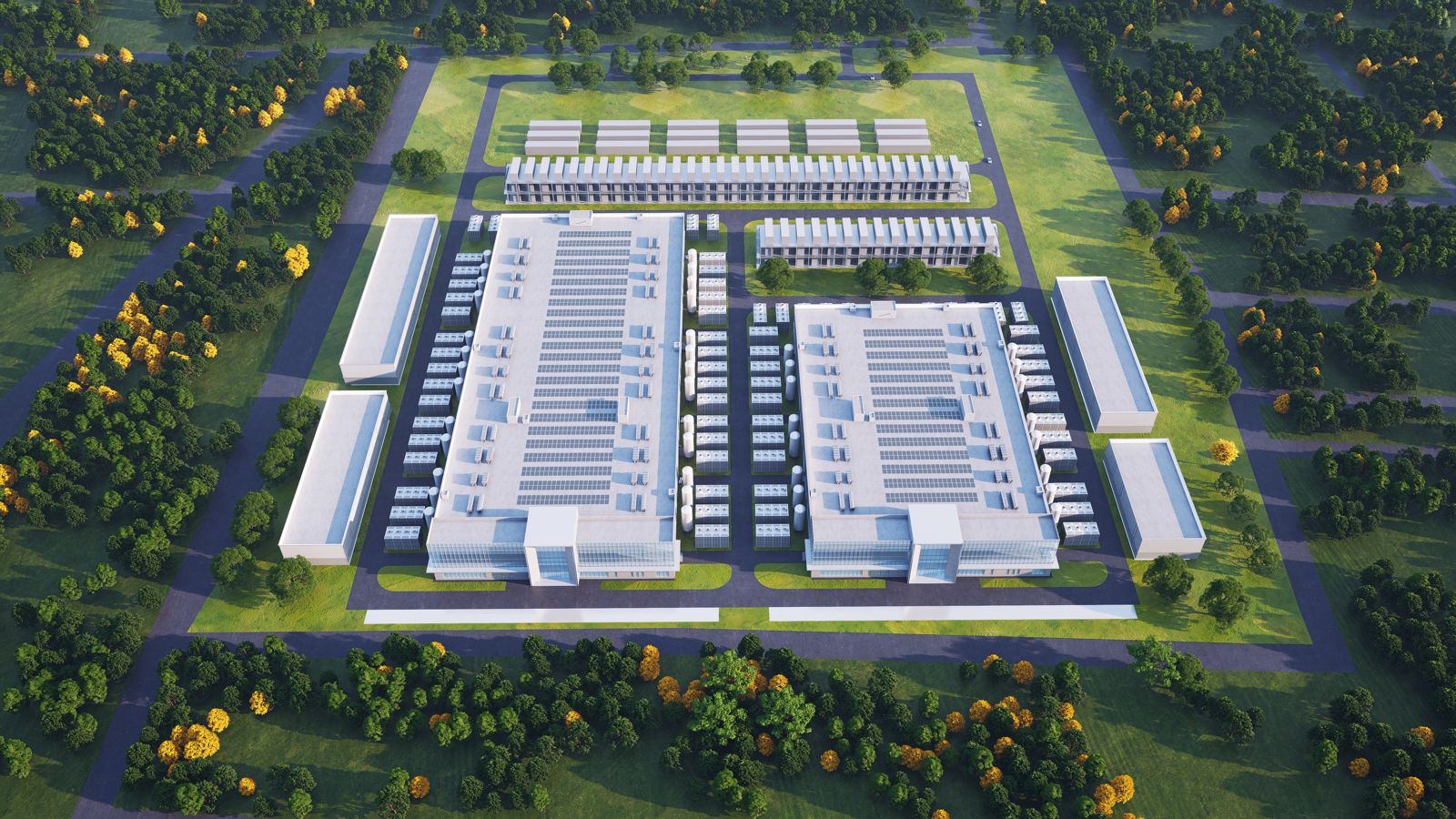
300 rai total (~48 ha) with approximately 2 ha for the AI compute block and ~40 ha dedicated to solar generation. No recorded flooding in 48 years, stable geotechnical conditions, and a 230 kV grid tower already on the parcel.
Solar PV Capacity
80 MW (76.76 MWp)
Battery Storage
20 MW BESS
Grid Connection
230 kV on-site
IT Capacity
50 MW
Total Land
300 rai (~48 ha)
Target RFS
~May 2028
Behind-the-Meter Solar
Direct generation on the campus means zero transmission loss and real-time carbon-free energy matching.
Continuous Clean Power
20 MW BESS bridges solar generation gaps. Grid backup ensures no outage risk during low-generation periods.
Direct PPA Available
Thai ERC enabled foreign-operator Direct PPAs from December 2025 — fully contracted clean energy.
Climate Resilience
No flooding history, stable soil, no seismic risk. Lowest natural-disaster exposure in the Thailand portfolio.
Acoustic mitigation at Coresphere campuses is an engineered solution based on equipment source levels and the location of sensitive receptors. Landscaping and green buffers are part of site integration and biodiversity design — they are not presented as the primary acoustic solution. Acoustic performance targets are set around community impact, not solely around statutory boundary compliance.
Detailed PUE and WUE design targets, cooling architecture specifications, and CFE matching commitments are available through the project data room.